
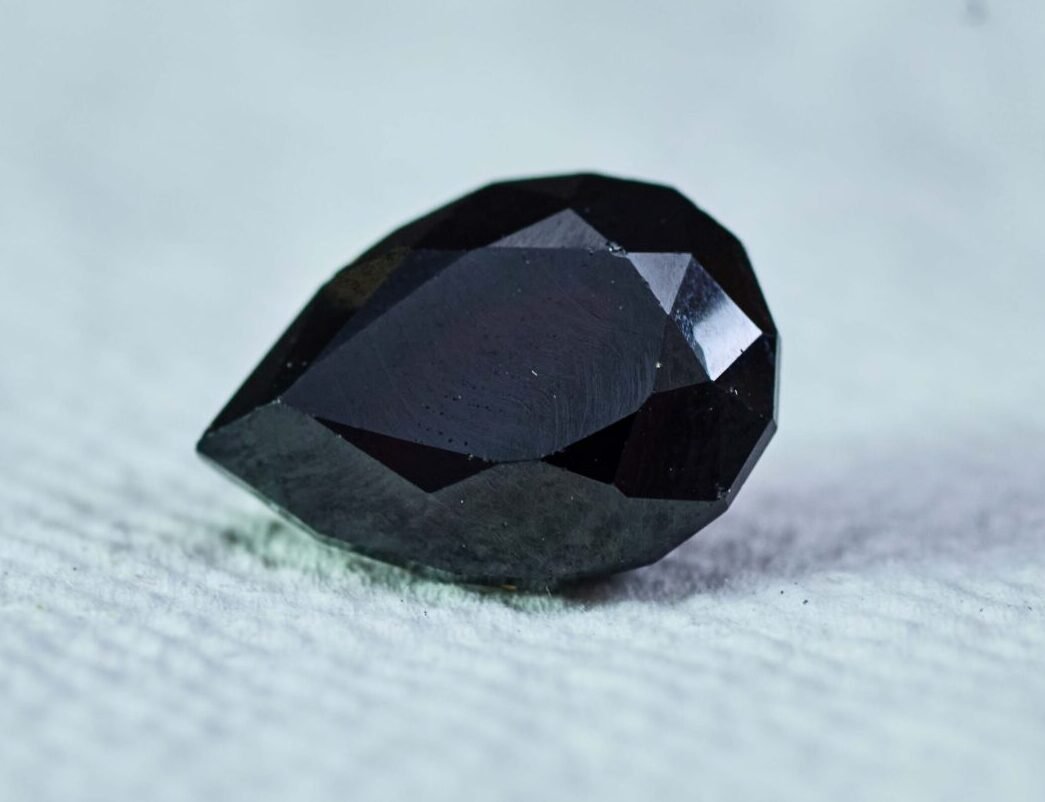
Garnet: Understanding Nature’s Most Diverse Gemstone Family
When most people hear “garnet,” they picture a deep red stone, perhaps from an antique jewelry piece. But thinking of garnet as simply “a red stone” is like thinking of dogs as “just golden retrievers.” We’re actually looking at an entire family of related minerals that spans nearly every color imaginable, each with its own formation story and special characteristics.
This common misconception about garnet being only red represents one of gemology’s most fascinating teaching moments. It shows how our understanding can both help and limit us. While red varieties were indeed the first garnets humans discovered, we now know that garnets represent one of nature’s most chemically diverse mineral families, all sharing the same basic crystal structure.
The Family Foundation: What Makes a Garnet a Garnet?
Think of understanding garnet like learning about a large family at a reunion. Members might look quite different at first glance, but once someone explains the relationships, you begin seeing the underlying similarities that connect everyone together.
All garnets share what we call a crystal structure – an invisible three-dimensional framework that determines how atoms arrange themselves within the mineral. Imagine building with very specific architectural blueprints. No matter what materials you use for construction, following the same blueprints creates buildings with the same basic shape and proportions, even if one uses brick and another steel and glass.
The garnet “blueprint” creates a cubic crystal system with specific symmetry properties. This consistent framework explains why all garnets, regardless of color or composition, share certain physical properties. They all have similar hardness ranges, break along predictable patterns when struck, and interact with light in mathematically related ways.
But here’s where the family analogy becomes even more useful. Just as family members inherit different trait combinations from their ancestors, different garnet species inherit different chemical compositions while maintaining the same structural framework. Some garnets incorporate aluminum and calcium, others aluminum and magnesium, still others aluminum and iron or manganese. Each combination creates a distinct garnet species with its own color range, optical properties, and formation requirements.
This concept of structural unity with chemical diversity explains why garnets appear in such varied colors and geological settings. The consistent crystal structure means they can all form under similar physical conditions, but the different chemical compositions mean they respond to different available elements in their formation environment.
The Science of Color: Understanding Garnet’s Amazing Variety
Pure garnet, like pure quartz, is actually colorless. Think of it as a blank canvas, with trace elements acting as nature’s paintbrushes. Iron atoms create deep red colors in almandine garnets and rich orange to red colors in spessartine garnets. Chromium produces the intense green of tsavorite garnets, while manganese contributes to spessartine’s peachy orange tones.
Here’s a crucial concept: the same element can produce different colors depending on its chemical environment. Iron creates red colors in almandine garnet but can contribute to green colors in demantoid garnet, depending on how it bonds with other elements and the specific crystal chemistry involved.
This principle explains why garnet identification requires more than color observation. A green stone might be a tsavorite garnet colored by chromium, a grossular garnet with different trace elements, or a demantoid garnet with iron in a specific chemical state. Professional gemologists use sophisticated instruments to determine not just what elements are present, but how they’re chemically bonded within the crystal structure.
Formation and Global Distribution
Garnets are metamorphic minerals, forming when existing rocks are subjected to intense heat and pressure that changes their mineral composition without completely melting them. Think of this like remodeling a house while still living in it – the basic structure remains, but the internal arrangement gets completely reorganized to adapt to new conditions.
Most garnets form deep within Earth’s crust, at depths of ten to thirty kilometers, where temperatures reach 400 to 800 degrees Celsius and pressures build thousands of times greater than sea level conditions. These extreme conditions are necessary because the garnet crystal structure requires significant energy to organize its complex atomic framework.
Different garnet species form under slightly different conditions, explaining their geographic distribution. Almandine garnets, rich in iron and aluminum, form under a wide range of metamorphic conditions, making them common in mountain belts worldwide. Pyrope garnets require higher pressures and associate with deep-crustal rocks or even materials from Earth’s mantle.
East Africa has emerged as one of the most important garnet regions, particularly Kenya and Tanzania producing the world’s finest tsavorite garnets. These brilliant green stones form in metamorphic rocks where specific chemical conditions allowed chromium to create intense green colors. Madagascar produces garnets with unusual color combinations, while India’s ancient deposits in Rajasthan have supplied stones for thousands of years.
The Ural Mountains of Russia gained fame for demantoid garnets, combining intense green color with exceptional fire and brilliance. These garnets formed in serpentine rocks under very specific conditions not found elsewhere in quite the same way.
Garnet and Nigeria: West African Geological Potential
Nigeria’s garnet potential represents one of Africa’s most exciting frontiers in gemstone development. The country sits on some of Earth’s most ancient geological formations, including portions of the West African Craton stable for over two billion years. These ancient rocks have been subjected to multiple metamorphic episodes that created ideal conditions for garnet development throughout Nigeria’s geological history.
The geological diversity encompasses virtually every rock formation type capable of hosting garnet deposits. Extensive metamorphic rocks, including schists, gneisses, and migmatites, extend across much of central and northern Nigeria, representing millions of square kilometers of potentially garnet-bearing territory.
The Kaduna-Kano region contains Precambrian metamorphic rocks with numerous noted garnet occurrences in mica schists and garnet-bearing gneisses formed during ancient mountain-building episodes. The Jos Plateau region, famous for tin production, also contains significant garnet potential in pegmatites and metamorphic rocks where the same processes that concentrated tin created favorable garnet formation conditions.
Nigeria’s geological conditions suggest the presence of diverse garnet types, from common almandine varieties to potentially rarer species requiring specific formation conditions. Recent discoveries of chromium-bearing minerals in some Nigerian deposits suggest possibilities for finding green garnets similar to East Africa’s famous tsavorites.
The challenge and opportunity lie in systematic exploration using modern gemstone evaluation techniques. Much geological survey work focused on industrial minerals rather than gemstones, meaning garnet occurrences were noted but not thoroughly investigated for gem potential. This creates significant opportunities for modern gem explorers equipped with current garnet geology knowledge and market requirements.
Cultural significance of red stones in many Nigerian societies creates natural garnet appreciation. Red garnets align with traditional preferences for stones symbolizing strength, passion, and protection, providing both domestic market potential and authentic international marketing opportunities.
The Major Garnet Species
Understanding individual garnet species helps you appreciate this family’s true diversity. Almandine represents the most common variety, with iron creating deep red to brownish-red colors. These garnets form under wide metamorphic condition ranges, explaining their worldwide occurrence and historical human recognition.
Pyrope garnets contain magnesium instead of iron, often displaying brilliant red color with orange hints. The name derives from Greek “pyropos,” meaning “fire-like.” Pyrope requires high-pressure formation conditions deep in Earth’s crust or upper mantle, explaining why it’s found in very different geological settings than almandine.
Spessartine introduces manganese as the coloring element, creating beautiful orange to red-orange colors. Named after Germany’s Spessart region, spessartine often forms in granite pegmatites where manganese-rich solutions were available during crystallization.
Grossular demonstrates the calcium-bearing garnet branch, with incredible color range from colorless to yellow, orange, pink, or green, depending on trace elements. Green grossular varieties include tsavorite, one of the most valuable garnet varieties, getting intense green color from chromium – the same element creating green in emeralds.
Andradite completes our major species survey, introducing calcium-iron chemistry that creates some of the most unusual and valuable varieties. The most famous andradite variety is demantoid, whose name means “diamond-like,” referring to its exceptional fire and brilliance that can exceed diamonds when properly cut.
Physical Properties and Identification
All garnet species fall within 6.5 to 7.5 on the Mohs hardness scale, with most around 7. This places garnets ideally for jewelry applications – hard enough to resist everyday scratching, yet soft enough for standard gemstone processing techniques.
Specific gravity varies significantly between species, reflecting different chemical compositions. Almandine and spessartine garnets, containing iron and manganese, have higher specific gravities (around 4.0 to 4.3) than pyrope and grossular garnets with lighter elements like magnesium and calcium (around 3.5 to 3.8).
All garnets crystallize in the cubic system, typically forming distinctive twelve-sided or twenty-four-sided crystals. These crystal forms can immediately identify a mineral as garnet family, even before other tests are performed.
The cubic crystal system means garnets don’t show pleochroism – different colors when viewed from different directions – unlike many other gemstones. This optical isotropy contributes to even color distribution that makes garnets excellent subjects for various cutting styles.
Care and Investment Considerations
Garnet care focuses on preventing thermal shock – sudden temperature changes that can create internal stresses causing cracking. While garnets tolerate moderate temperature changes easily, avoid rapid heating followed by quick cooling.
Cleaning requires only gentle methods. Warm water with mild soap provides effective, safe cleaning for routine maintenance, while soft brushes can remove stubborn deposits without scratching. Ultrasonic cleaners are generally safe, but steam cleaning should be avoided due to thermal shock potential.
Investment potential varies dramatically between species. Rare varieties like fine demantoid from Russia’s Urals or exceptional tsavorite from East Africa can command prices rivaling emeralds or sapphires, particularly with superior color, clarity, and size. Supply constraints from limited geographic occurrence support strong values for high-quality specimens.
Common varieties like almandine provide accessible entry points for developing appreciation and expertise, while rare species challenge experienced collectors with complexity and value. This spectrum means garnet appreciation can grow and evolve with collector knowledge and resources.
Cultural Significance and Future Outlook
Traditional healing practices have long associated garnets with life force, passion, and protection. Ancient practitioners believed garnets could strengthen blood, enhance courage, and protect travelers. While modern science doesn’t support medical claims, these historical beliefs help explain garnets’ deep cultural embedding worldwide.
Different species have developed distinct associations relating to their colors and properties. Green tsavorites connect with heart chakra work and emotional healing, while orange spessartines associate with creativity and joy, demonstrating how physical properties influence psychological and spiritual interpretations.
The future appears bright for garnets, driven by several converging trends. Growing appreciation for colored gemstones in engagement jewelry benefits varieties like tsavorite and demantoid that rival traditional precious stones while offering superior hardness. Emerging Asian markets show increasing sophistication and purchasing power supporting high-quality garnet demand.
New source development, particularly in Africa, continues revealing garnets with previously unknown characteristics or superior quality examples. Recent discoveries suggest significant potential remains unexplored in many geologically favorable regions.
Conclusion: Appreciating Garnet’s Complete Story
Our journey through garnets reveals a mineral family perfectly embodying the intersection of scientific fascination and human appreciation for natural beauty. From understanding crystal chemistry creating diverse colors within a single structural framework to exploring geological processes concentrating these treasures worldwide, garnets demonstrate how geological knowledge enhances natural wonder appreciation.
Nigeria’s connection to garnets represents broader themes about untapped potential and opportunities existing when geological knowledge meets entrepreneurial vision. The country’s ancient metamorphic terranes contain geological prerequisites for significant garnet deposits, while growing gemstone expertise and market access create conditions for successful development.
For enthusiasts, garnets offer an ideal combination of accessibility and sophistication. Common varieties provide entry-level opportunities for developing appreciation, while rare species challenge even experienced collectors. This spectrum means garnet appreciation can grow along with collector knowledge and resources.
Whether appreciated for industrial utility, spiritual associations, or undeniable beauty, garnets continue serving human needs across remarkable application ranges. They remind us that natural beauty often emerges from complexity rather than simplicity, with the family’s diversity reflecting incredibly complex planetary processes while their consistent structure demonstrates the underlying order governing natural systems.