
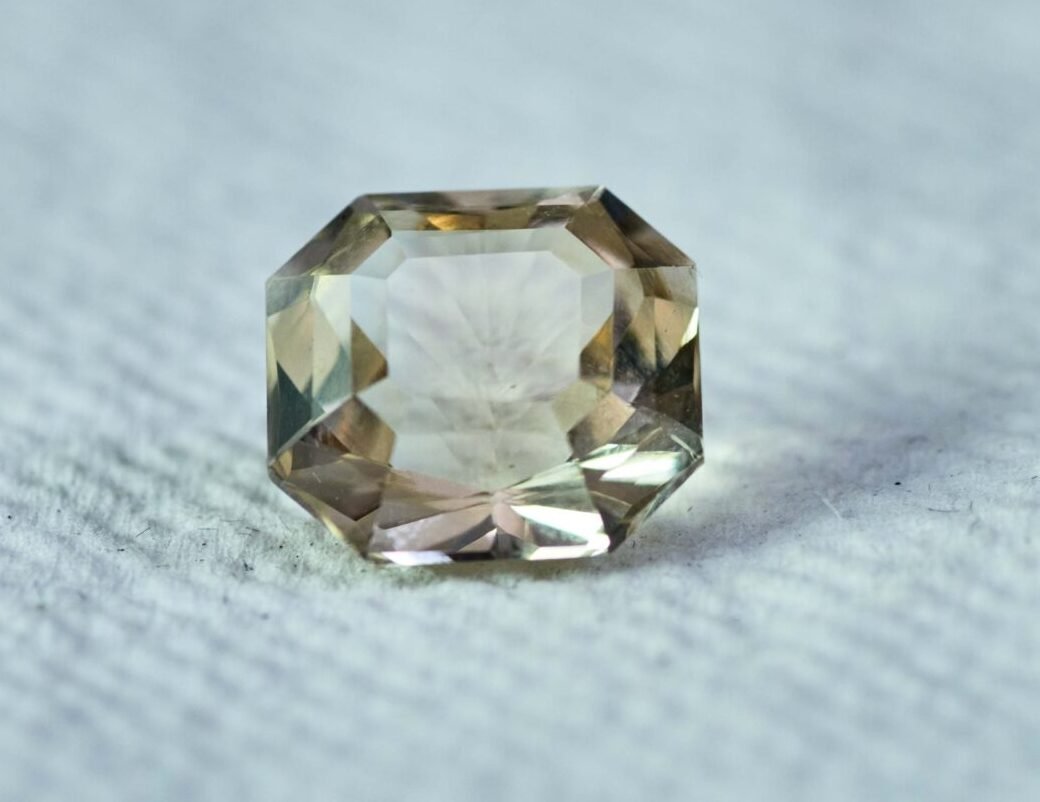
Morganite: The Peachy Pink Gem of Love and Compassion
Imagine holding a piece of captured sunset, where soft peachy pink hues seem to glow from within a crystal clear stone. This is Morganite, one of the most romantic and sought-after gemstones in the beryl family. Named after the famous American financier and gem collector J.P. Morgan, this enchanting stone has captivated hearts worldwide with its gentle beauty and symbolic associations with divine love and emotional healing.
Understanding Morganite: The Science Behind the Beauty
To truly appreciate Morganite, we need to understand what makes it so special from a scientific perspective. Morganite belongs to the beryl family, sharing its fundamental crystal structure with more famous cousins like emerald and aquamarine. The key difference lies in the trace elements that create its distinctive coloring.
Think of beryl as a blank canvas. Pure beryl is actually colorless, but nature acts as an artist, adding tiny amounts of different elements to create spectacular colors. In Morganite’s case, manganese is the magic ingredient. These manganese ions substitute for some of the aluminum atoms in the beryl’s crystal lattice, creating that beloved peach to rose-pink coloration that makes collectors’ hearts skip a beat.
The stone measures 7.5 to 8 on the Mohs hardness scale, making it quite durable for everyday wear. This hardness, combined with its excellent clarity and brilliant luster when properly cut, explains why Morganite has become increasingly popular in engagement rings and fine jewelry. The crystal system is hexagonal, often forming in beautiful prismatic crystals that can grow quite large, sometimes weighing several pounds.
The Geological Journey: How Morganite Forms
Understanding how Morganite forms helps us appreciate why it’s found in specific locations around the world and why high-quality specimens are relatively rare. Morganite typically forms in pegmatites, which are essentially the last stages of granite formation deep within the Earth’s crust.
Picture this geological process as nature’s slow-cooking method. As molten granite cools over millions of years, most minerals crystallize first, leaving behind a residual liquid rich in rare elements like lithium, boron, and manganese. This remaining liquid eventually cools to form pegmatites, creating perfect conditions for beryl crystals to grow slowly and incorporate the manganese that gives Morganite its color.
The pegmatite environment also explains why Morganite crystals can grow to impressive sizes. The slow cooling process and abundance of space allows crystals to develop without constraint, creating the large, well-formed specimens that make spectacular gems and collector pieces.
Global Distribution and Notable Sources
Morganite deposits are found in several countries around the world, each producing stones with slightly different characteristics that reflect their unique geological environments. Understanding these sources helps us appreciate the global nature of this beautiful gem.
Brazil stands as one of the most important sources, particularly the state of Minas Gerais. Brazilian Morganite often displays the most desirable peachy-pink colors and excellent clarity. The famous Conselheiro Pena region has produced some of the world’s finest specimens.
Madagascar has emerged as another crucial source, producing Morganite with slightly different color tones, often showing more rose-pink hues. The island’s unique geological history creates pegmatites with distinct characteristics that influence the final appearance of the gems.
The United States, particularly California and Maine, produces beautiful Morganite specimens. California’s deposits have yielded some enormous crystals, while Maine’s pegmatites produce stones with excellent color saturation.
Afghanistan, Pakistan, and parts of Africa also contribute to the global Morganite supply, each region adding its own character to this diverse gemstone family.
Morganite and Nigeria: Exploring African Connections
While Nigeria is not traditionally known as a major Morganite producer, understanding the West African geological context helps us appreciate the broader African contribution to the global beryl family and the potential for future discoveries.
Nigeria’s geological landscape is incredibly diverse, featuring ancient crystalline rocks that span billions of years of Earth’s history. The country sits on the West African Craton, one of the oldest and most stable pieces of continental crust on Earth. This geological foundation includes extensive areas of pegmatites and granite intrusions, which are exactly the types of rock formations where beryl family minerals, including Morganite, typically form.
The Jos Plateau region of Nigeria, famous for its tin mining heritage, contains numerous pegmatite deposits. While these pegmatites are better known for producing tin, tantalite, and other minerals, the geological conditions that created them are remarkably similar to those found in established Morganite-producing regions elsewhere in Africa.
Nigeria’s gemstone industry has traditionally focused on other minerals like sapphire, tourmaline, and topaz, but the country’s vast unexplored pegmatite fields hold potential for beryl discoveries. Several neighboring West African countries have reported beryl occurrences, suggesting that Nigeria’s geological environment could support similar finds.
The growing interest in Nigeria’s gemstone potential, combined with improved geological surveying techniques, means that future Morganite discoveries remain a genuine possibility. For Nigerian gem enthusiasts and collectors, understanding Morganite’s formation requirements helps in recognizing potentially productive areas for exploration.
Even without local production, Morganite holds special significance in Nigeria’s growing jewelry and gemstone market. As Nigerian jewelers increasingly incorporate international gemstones into their designs, Morganite’s romantic associations and beautiful colors make it particularly appealing for engagement rings and special occasion jewelry that celebrates love and commitment.
Physical Properties and Identification
Learning to identify Morganite requires understanding its key physical characteristics and how they distinguish it from other pink gemstones in the market.
The color range extends from pale peachy-pink to deeper rose-pink, with the most valuable stones showing strong saturation without being too dark. The color is typically even throughout the stone, though some specimens may show subtle color zoning. Under different lighting conditions, Morganite can appear slightly different, often looking more peach in incandescent light and more pink in daylight.
Clarity is typically excellent in gem-quality Morganite. Unlike emerald, which almost always contains visible inclusions, fine Morganite is usually eye-clean, meaning no inclusions are visible to the naked eye. When inclusions are present, they often appear as thin tubes or negative crystals that can actually help confirm the stone’s identity.
The refractive index ranges from 1.577 to 1.583, giving properly cut Morganite a brilliant sparkle. The stone shows weak pleochroism, meaning it can display slightly different colors when viewed from different directions. This property becomes important when cutting the stone to achieve the best possible color presentation.
Historical Significance and Cultural Meaning
While Morganite was officially named in 1911, making it relatively young in gemological terms, its discovery and naming carry significant historical weight that connects to broader themes of American industrial might and the golden age of mineral collecting.
J.P. Morgan, the stone’s namesake, was not just a wealthy financier but also a passionate patron of the arts and sciences. His support for mineral collecting and geological research helped establish some of America’s most important natural history collections. The decision to name this beautiful pink beryl after him reflected both his contributions to mineralogy and the American spirit of discovery during the early 20th century.
The timing of Morganite’s official recognition coincided with the Art Nouveau movement, which celebrated natural forms and organic beauty. The stone’s soft, romantic colors perfectly captured the aesthetic sensibilities of this artistic period, leading to its incorporation into jewelry designs that emphasized flowing, natural lines and feminine grace.
In metaphysical and spiritual traditions, Morganite has become associated with divine love, compassion, and emotional healing. Many believe the stone helps open the heart chakra, promoting unconditional love and assisting in releasing old emotional wounds. Whether or not one subscribes to these beliefs, the stone’s gentle energy and beautiful appearance certainly evoke feelings of peace and tenderness.
Modern Applications and Market Value
Today’s Morganite market reflects both the stone’s inherent beauty and changing consumer preferences in fine jewelry. Understanding these market dynamics helps both collectors and jewelry buyers make informed decisions.
The engagement ring market has particularly embraced Morganite as an alternative to traditional diamond solitaires. Young couples often choose Morganite for its romantic color, excellent durability, and more accessible price point compared to high-quality diamonds or colored diamonds. The stone’s association with love and compassion adds meaningful symbolism to these important jewelry pieces.
Fashion jewelry has also discovered Morganite’s versatility. The stone’s neutral pink tones complement both warm and cool metal settings, working beautifully with rose gold, white gold, and platinum. Large Morganite stones make stunning statement pieces, while smaller stones can be used in delicate, feminine designs.
The collector market values Morganite specimens both as cut gems and as natural crystals. Large, well-formed crystals with excellent color command premium prices, especially those from famous localities. Cut gems are evaluated based on the traditional four Cs: color, clarity, cut, and carat weight, with color being the most important factor in determining value.
Care and Maintenance
Proper care ensures that Morganite jewelry maintains its beauty for generations. Understanding the stone’s properties helps owners protect their investment and enjoy their gems for years to come.
The stone’s good hardness makes it suitable for regular wear, but like all gemstones, it benefits from thoughtful care. Avoid exposing Morganite to extreme temperature changes, which could cause internal stress or even cracking. While the stone is generally stable, sudden heating or cooling should be avoided.
Cleaning requires only gentle methods. Warm, soapy water and a soft brush work perfectly for routine maintenance. Ultrasonic cleaners are generally safe for Morganite, but steam cleaning should be avoided due to the potential for thermal shock. Professional cleaning once or twice a year helps maintain the stone’s brilliant luster and checks for any setting issues that might need attention.
Storage should protect the stone from scratching against harder materials. While Morganite can scratch softer stones like pearl or opal, it can be damaged by harder stones like sapphire, ruby, or diamond. Separate compartments or soft cloth pouches provide ideal protection.
Investment Perspective and Future Outlook
The Morganite market has shown steady growth over the past decade, driven by increasing consumer awareness and appreciation for colored gemstones. Several factors contribute to its positive investment outlook.
Supply considerations play an important role in long-term value. While Morganite is not as rare as some colored stones, high-quality material with excellent color and clarity remains limited. The best sources produce relatively small quantities of top-grade material, supporting steady demand and price appreciation.
Consumer trends favor Morganite’s romantic appearance and symbolic associations. As younger generations seek alternatives to traditional diamond engagement rings, Morganite’s combination of beauty, durability, and meaning positions it well for continued growth.
The improving quality of gem cutting and treatment techniques means that today’s Morganite jewelry often surpasses older pieces in terms of brilliance and overall appearance. However, natural, untreated stones continue to command the highest prices among serious collectors and connoisseurs.
Conclusion: Embracing Morganite’s Gentle Power
Morganite represents more than just another beautiful gemstone. It embodies the perfect balance between scientific fascination and emotional resonance, offering us a tangible connection to the Earth’s creative forces while speaking to our deepest desires for love and compassion.
Whether you’re drawn to Morganite for its geological story, its historical significance, its metaphysical properties, or simply its undeniable beauty, this peachy-pink gem offers something special for everyone. Its growing presence in the international market, including emerging markets like Nigeria, reflects our universal appreciation for natural beauty and meaningful symbolism.
As we continue to explore and appreciate the world’s gemstone treasures, Morganite stands as a reminder that some of nature’s most beautiful creations come not from dramatic geological violence, but from the slow, patient processes that allow true beauty to crystallize over millions of years. In a fast-paced world, perhaps we can all learn something from Morganite’s gentle, enduring presence.